
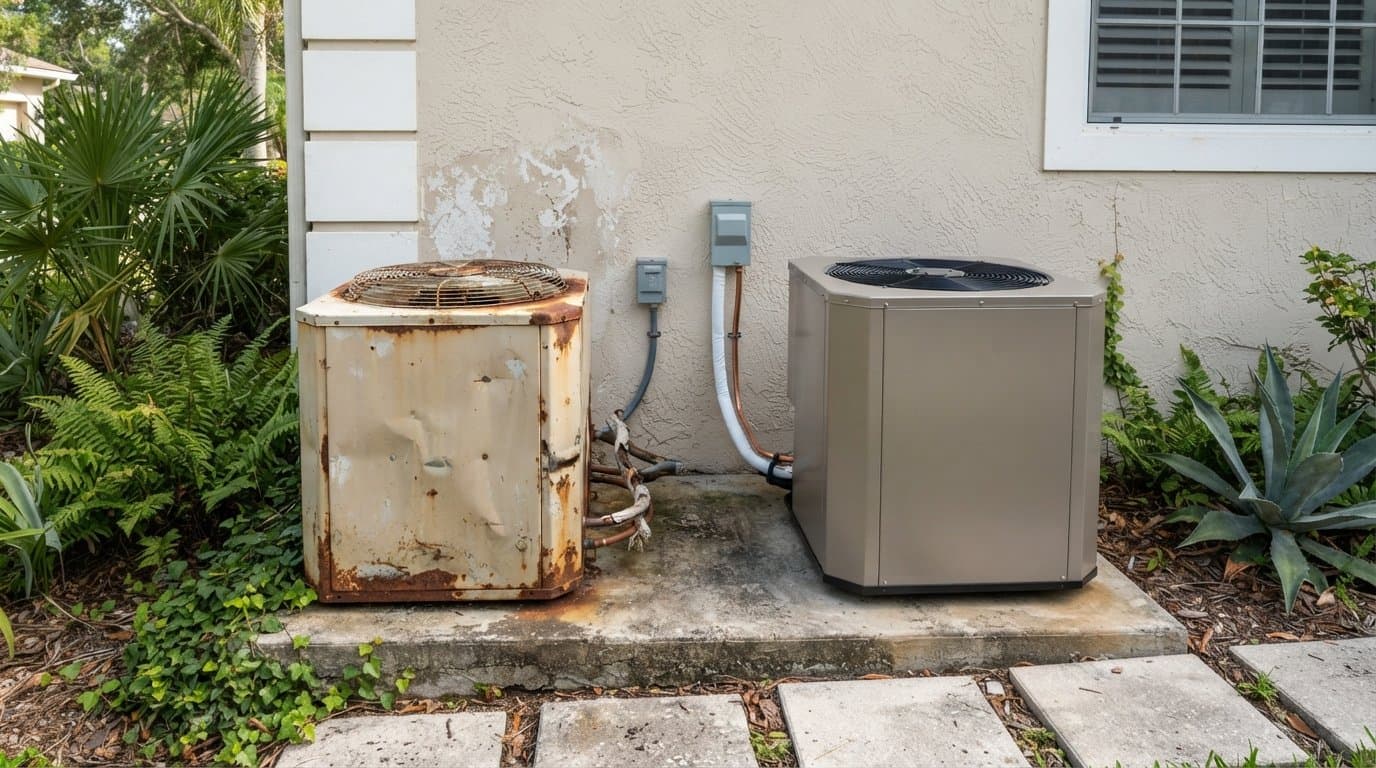
Every summer we get the same call: "The tech said we need a new system. Is that true?"
Sometimes yes. Often no. Here's the honest decision framework we use ourselves when advising homeowners.
The three rules that actually matter
1. The 30% rule
If the repair cost is more than 30% of the price of a comparable new system, replacement usually wins on long-term math. Example: a $2,400 evaporator coil replacement on a 12-year-old system that would cost $8,500 to replace is 28% — right at the line. Once the number crosses 40–50%, replacement is almost always smarter.
2. The age rule
- 0–8 years: Repair. Modern equipment is worth keeping.
- 9–12 years: It depends. Get both quotes, run the math.
- 13–15 years: Lean toward replacement. Second big failure is likely close behind.
- 16+ years: Replace, unless the repair is tiny (< $250).
3. The refrigerant rule
If your system uses R-22 ("Freon" — phased out since 2020), any refrigerant-related repair is going to be expensive because R-22 is scarce and getting scarcer. On an R-22 system with any refrigerant issue, replacement is almost always the answer.
R-410A and the newer R-32 / R-454B refrigerants are still widely available — no reason to replace on that basis alone.
Two questions that reveal the real answer
"How many times has this system broken in the last three years?"
If the answer is 0 or 1, and the system is under 12, repair. If the answer is 3+, you're about to buy a new system in pieces — replace all at once.
"What is the failure — mechanical, electrical, or coil?"
- Electrical (capacitor, contactor, relay): cheap, repair.
- Blower motor, ECM board: moderate, weigh by age.
- Compressor or coil (indoor or outdoor): expensive, lean replace after year 10.
The efficiency math is smaller than you think
A jump from an old 10 SEER unit to a new SEER2 15.2 will roughly cut cooling energy use by 25–35% in Central Florida. On a $180/mo summer electric bill, that's $45–60/mo — real money, but not usually enough to pay back replacement inside the equipment lifetime unless the old unit is very inefficient.
Efficiency alone doesn't make replacement math work. Efficiency + age + repair cost together might.
Where the salespeople get it wrong
- "We recommend replacement any time it's over 10 years." Not true. Well-maintained systems commonly run 15–18 years in Florida.
- "A new system will pay for itself in energy savings." Only in extreme cases. Sell replacement on reliability and comfort, not "savings."
- "Same-day price today only." Bad sign — nothing changes tomorrow.
The Northgate honest take
- Under 10 years, less than 30% repair cost, non-refrigerant issue: repair.
- 10–14 years, moderate repair, second major failure this decade: weigh both quotes carefully.
- 15+ years, any significant repair: replace.
- R-22 with a leak: replace.
Not sure where you land? Try our Repair-vs-Replace calculator or schedule a second opinion. We'll give you the honest number.